

The Revival of a Forgotten Machine: Restoring My Suzuki Kizashi

This overhaul has been a true labour of love every painstaking repair brought the Kizashi one step closer to its former glory.

For almost two years, I was on a quiet hunt for the perfect vehicle not just something to drive, but something to escape in. A vehicle I could start living in. Something I could build from the ground up. I wanted to know each screw, every corner. Make it mine. I was hunting for something with character or so common that I could give it a character.
And then I remembered the Kizashi. A car that used to drop my jaw as a kid. Rare. Misunderstood. And of course, the replacement parts nightmare. But it screamed my name. A 2.4l NA engine, 6 speed manual transmission, a solid build, and the kind of uniqueness that called out to be turned into something more.
Nearly a year spent hunting for a rare manual Kizashi. I had found one.
Barely holding itself together, clutch shattered, gearbox bolts rusted in place, exhaust leaked, engine mounts gone. Power seats stuck, and the underbody slowly being eaten by rust. It had once belonged to a father and son who were as passionate about it as I was. Had travelled across half the country just to bring it home.
Restoring something this rare meant there were no shortcuts. There were no donor cars, no easy replacements. Every single fix had to be custom-fabricated, or sourced from scrapyards that didn’t even know what a Kizashi was.
The fight was what made it alive again.
Transmission:
The first challenge was the clutch and it felt like wrestling with a decade of decay. Dropping the chassis, unmounting the driveshaft, fighting through bolts that had rusted into bone.
When we finally got to the gearbox, it looked like a war zone. The clutch plate had shattered into three pieces, its shards scattered throughout the casing. Bolts were jammed and broken, refusing to turn even with leverage.
To replace the system, we had to lower the entire chassis for access. The transmission was removed and taken to a welder who used long rods to weld onto the broken bolts just so they could be pulled out.
Each rusted bolt I pulled out felt like removing a layer of neglect not just from the car, but from myself.
Three exhausting days later, a new clutch, bearing, and slave cylinder went in. The underbody was de-rusted, new linkages fabricated.
Little did I know 6 months later, the clutch release bearing inside the transmission box was leaking/rusted and for the third time we had to lower the chassis, take out the transmission and open it up again. Even after replacing the part, and packing everything up again it didn’t fix the problem. It took me another week to figure out that oddly the clutch pedal sits lower than the brake and the gas pedal, not having enough room to build the exact pressure to activate the clutch.
Without even bothering to find the exact clutch cylinder I decided to cut and weld 1 inch of extra rod in the existing one, which needed to be very precise since the cylinder was made out of plastic for some reason. After days of this process, after the fourth time of taking out the transmission and packing it again, I pressed the clutch and for the first time, the Kizashi moved without limping again.
Engine Mounts:
The next challenge was the engine mounts or rather, finding them. Most dealers didn’t even know the Kizashi existed.
After months of searching, I managed to import two mounts from Suzuki Japan, but the third was impossible to find. It had been on back order in india for eight years. With advance payments, service complaints, multiple visits and emails to the suzuki after sales service, I had no choice but to reinforce the old one, installing a new bushing into the broken housing. It wasn’t perfect, but it worked. I wasnt chasing perfection anyway, just persistence. The Kizashi and I we’ve both broken down, waited months for missing parts, and somehow, each time, found a way to start again.
Exhaust:
The exhaust was rebuilt from scratch using stainless steel pipes. The process involved deleting multiple resonators, welding exhaust leaks with stainless steel, and designing a custom bolt-and-nut system for the end cans, allowing an easy switch back to stock if needed.
The new exhaust had a deep bass note that wasn’t obnoxiously loud, just enough to give it personality. Oddly enough, it even improved fuel efficiency. Maybe because now I could hear the revs, feel the rhythm, and shift more intuitively.
The more time i was spending with the Kizashi, the more we were starting to understand each other’s language, slowly adapting to how we like to move togerther.
Wheels and Paint Restoration
The wheels were repainted pearl white, the calipers candy red, a sharp contrast against the car’s deep black body.The front and rear bumpers were repainted to match the car’s original finish. The previous coat was thick, high-quality black layer with a hint of midnight blue, a rushed job, applied too heavily likely due to limited spraying space.
To correct this, we used multiple stages of wet sanding (P800 → P1200 → P2000 grit) to gradually thin the existing paint without damaging the underlying surface. Once leveled, a 2K primer was applied for adhesion, followed by the base coat mixed to replicate the original shade. Finally, a high-gloss clear coat was added for durability and depth, ensuring a seamless and long-lasting finish.
Custom Fiber Work: The Handcrafted Skirts and Spoiler
The Kizashi’s transformation wouldn’t be complete without custom bodywork.
I worked with Shaukeen, a craftsman who specializes in custom fiber body kits and bumpers, preferring to design and build each piece himself instead of delegating. His process is purely handcrafted he listens to what the customer envisions, mentally sketches the design, and then sculpts it using putty and fiber as a base.
For the spoiler lip, we started by creating a thin fiber and putty, a base was molded to fit the trunk’s contours, and using a pre-existing mold as a guide, successive layers of fiberglass were applied with resin, cured, and then sanded and polished to perfection.
The side skirts were crafted in a similar fashion, carefully shaped to complement the car’s Japanese-inspired lines. Every component is hand-tailored to enhance the vehicle’s aesthetics while ensuring structural integrity a true testament to custom work that brings the Kizashi back to life.
The best part about working with Shaukeen was that each piece is handcrafted specifically for your car. Each piece one of one. Each curve told a story of patience.
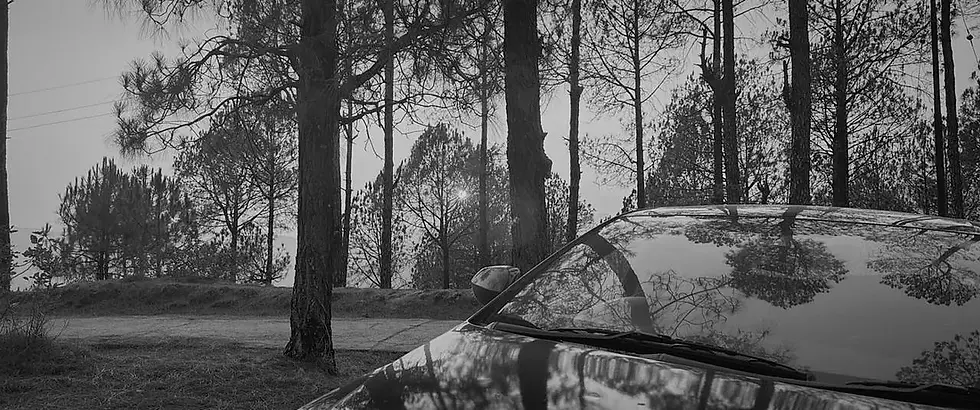
The reflection of its curves, the quiet aggression feels like looking at something that rebuilt itself through sheer will.
Memory Seats & Interior Transformation
Fixing the memory seats was a real headache. Both the driver and passenger seats, which are electronically adjustable, were twisting unevenly when moved. The metal drive cable meant to connect the motor to the opposite rail lost its proper support. One cable was completely missing, and the other was damaged. Sourcing an exact replacement was nearly impossible. i searched all over mayapuri and by pure luck managed to find the only two available cables, worn but still fixable.Meanwhile, the driver’s seat got stuck in a position where we couldn’t even reach the bolts to remove them also making the car not drivable.
Temporarily, we rigged up a loose-wired support system that only lasted about 10 days before giving out. The permanent fix was finally welding a metal support rod.
Since the seats were already out, I reupholstered them in black Magnolian leather with red stitching, converting the once-beige cabin into a black-and-red cocoon. The dash trims and switch panels were repainted in candy red, matching the calipers.
Even the doors were dampened for better sound insulation and warmth.
Removing the steering wheel revealed that the multifunction buttons were water-soaked. After drying and replacing the wiring, the buttons and the cruise control started to work again.
It was frustrating, expensive, and chaotic but it finally began to look like the car I had always imagined.
OEM Stereo: Keeping the Soul Intact
Restoring the original stereo was a challenge. The unit had multiple issues buttons were unresponsive, the LCD panel was glitching, and there was no AUX or Bluetooth input. Since OEM replacements were nearly impossible to find, I took it to an old-school audio technician who specialized in repairing classic stereos, old CD players along with tape decks.
He swapped in an old LCD panel, which still has minor glitches but at least keeps the audio running smoothly even if the display turns off from time to time. The ICE panel, short curcuiting also was replaced by a new one fabricated for it.
Finding a compatible AUX/Bluetooth adapter was another hurdle the stereo had four ports, with one left unused, but the specific adapter was nearly impossible to source. With just an inbuilt USB port i’ve been using the makeshift pen drive bluetooth which compresses the audio quality a bit but with 2 way 4 component speakers and enough damping, it is just enough.
Despite the limitations, I chose to keep the OEM stereo. Its neon grey display, paired with the red-trimmed interior, gives off a proper retro cyberpunk aesthetic, enhancing the car’s classic Japanese character.
It’s imperfect, but it’s real. Like everything else in this car.
Camper Conversion: Where Restoration Meets Escape
Converting it into a sleeper camper was my rebellion, a way to take something refined and give it a new wildness.
The idea was simple to make the Kizashi not just a car I drive, but a space I could live in. I removed the rear seats back support, replacing them with a custom-built setup that could transform from a seatback into a bed.
A large wooden panel, strong enough to hold 200 kilos, became the base. I upholstered it in the same black Magnolian leather used for the seats so it would blend seamlessly with the rest of the interior. Where the old seat fixtures once sat, I drilled in a wooden log support, sturdy enough to hold the weight of the panel.
Using metal hinges, the panel now folds down to become a bed and locks upright to serve as a backrest. A pair of simple steel latches keeps it locked in place when it’s upright, and when folded flat, it extends into the boot turning the car into a small bedroom.
The transformation gave me two things: space and silence. The boot now connects directly to the cabin, allowing a full-length bed for two people. It’s not flashy it’s functional, raw, and looks almost factory-made when folded up. The wooden partition fits so neatly that it goes unnoticed, blending into the black leather and trims.
When the bed folds down, a custom-made mattress drops perfectly into place, completing the setup. It’s simple, modular, and practical but also deeply personal. This wasnt just a mod; it’s a space built for stillness, for nights parked under quiet skies, with nothing but the sound of the engine cooling down and the world fading into the hum of the night.
What started as a mechanical restoration became something else entirely a test of patience, creativity, and belief. Keeping the Kizashi alive wasn’t about nostalgia. It was about proving that even in a world obsessed with replacing things, some machines deserve to be rebuilt.
And maybe that’s the point.
This wasn’t about restoring a car it was about reviving something that shouldn’t have been forgotten. The Kizashi is one of the last of its kind. A naturally aspirated manual sedan in a world moving toward EV’s, hybrids and automatics. It’s a car built for connection, not convenience. Keeping it alive wasn’t just about the build, but about holding onto something special.

“Some cars are meant to be driven. Others are meant to drive you back to yourself.”


Comments