

Alignment, Not Escape — Kizashi Diaries chapter III


After coming back from Uttrakhand, I wanted to leave again almost immediately. Delhi closed in faster this time. I slipped back into routine, but not completely. I tried to protect the creative momentum I had built in solitude, holding onto it as I moved through familiar streets, familiar conversations. Somewhere in the background, I was watching for signs. Patterns. Small shifts. The kind of butterfly flap that nudges things forward without announcing itself.
I wasn’t chasing anything specific. I was just staying ready.Soon enough, something appeared.

A friend I had made earlier in the mountains, someone I’d stayed in touch with, reached out one day and asked if I wanted to be part of her project, this film she wanted to make for years. There was no exchange of work, no questions. It was instinct. Trust.
A feeling that maybe I might be a help, back in the same landscape where I had found that energy in the first place. The best part was how immediately my body reacted.
There was no hesitation. No weighing pros and cons. Every inch of me already knew the answer. It felt like alignment, not coincidence, but timing. As if everything I had been doing quietly, without clarity or reassurance, had been preparing me for this. It felt earned, in a way that didn’t need validation.
I thought about manifestation, about the universe responding, A door opening just enough for me to step through. A reward, maybe, not for succeeding, but for staying in motion. For continuing even when things didn’t make sense.
Before this new adventure began, I realised something else: Kizi was in urgent need of repairs. After days of trying to figure out exactly what was wrong with it, after taking out the transmission for the fourth time and fixing the clutch system for the sixth time, it was finally ready. Kizashi, after a long year, was perfectly restored.Yet for some reason, I didn’t have enough confidence to make it my escape machine once again.
Even though I was going to the same place where our bond grew stronger, where we learnt to trust each other, where we survived together. I decided not to take it, and it broke my heart not to.I lost the confidence I once had in the car for some reason, even though it was working fine. I just started to doubt it. This paranoia that it might break again, or that maybe I haven’t fixed it properly yet.As much as it was meant to handle anything, I believed this trip would take a toll on it, and I wouldn’t have the time to tend to it.

We had to leave the next day and it felt like I was leaving behind a part of my personality. I had associated myself with the car so much that it had become a part of my identity.
My journey this time required the car to be just a means of commute, to meet deadlines, to make up for lost time. It needed to carry people, equipment, luggage, through heavy rainfalls, rough off-road terrains, flash floods, and 80-degree inclines every single day.I needed something I wouldn’t worry much about if broken down. Something easy to fix. Something that wouldn’t demand my heart every time it coughed.
This time I didn’t need poetry, I needed practicality. So I decided to take my 1L VW Ameo.
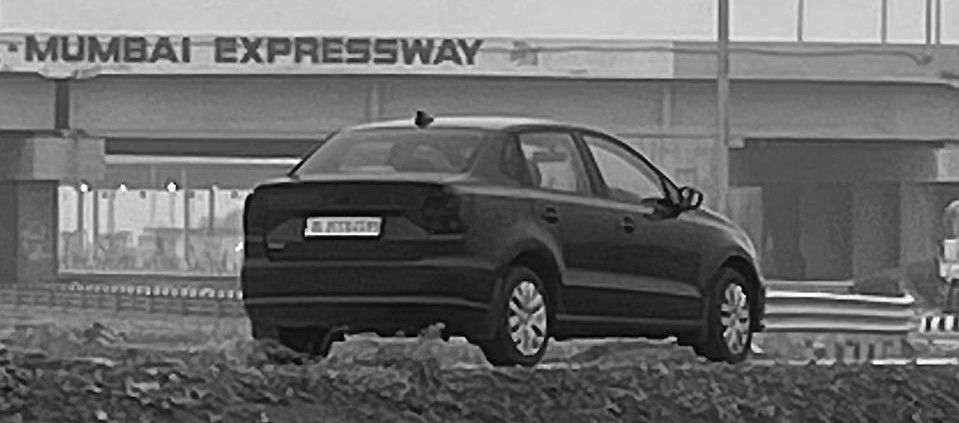
It wasn’t as powerful as the Kizashi, not by any stretch, but it had its quiet determination. Small enough to squeeze through the narrow mountain lanes, light enough to take sharp turns without my heart dropping, simple enough for me to fix on the go.
In some strange way, it felt like returning to an old self, the one that moved without thinking, without feeling the need to romanticise every mile.
I took Ameo this time because I needed the car to stop meaning so much.It was familiar. I had already pushed it before through long days and nights, broken roads, careless driving, neglect. I knew where it would complain and where it wouldn’t. I trusted it not just because I loved it, but because I understood it.
The difference in torque was obvious the moment the mountains began, but I stopped thinking about it quickly. The Ameo didn’t ask me to listen to it. It didn’t ask for reassurance. It simply moved.
I stayed in the mountains for another fifty days. The days started folding into each other early mornings, late nights, short drives, waiting, rushing, and stopping. Ameo became a crowd carrier, a shuttle, a pause between locations. The narrow roads that once felt a little threatening now felt repetitive, almost meditative. Familiar enough to stop noticing, dangerous enough to stay alert.
I felt a very strong presence of the universe around me this time.
Every passing day felt like a reminder that there was something bigger than us at play, something in power. I felt one with my surroundings, the forest, the mountains. Everything felt clearer to me, the pattern, the way the universe was working.
The abundance of people and connections I was making felt unreal. Things that once felt grand, distant, hard to achieve were suddenly just… there. Simply because we were visualising them. Manifestation felt strong, to the point where even our imagination started to feel like a limitation.
Everything we were planning for the film was slowly being taken over by things we couldn’t control. Things we weren’t accounting for were being added on their own. Our film wasn’t being executed the way we had planned it; it was being guided by what was out of our hands. People. Weather. Coincidences. Emotions.

The set started to feel like a puzzle we didn’t have to design, just solve. The pieces were already there, being handed to us by the universe, one by one. And all we had to do was stay present enough to see them.
It was strange being back at all these places I had first reached with the Kizashi. Same turns. Same slopes. Different me. Closer to the person I wanted to become. Only without the thing that helped me reach this place.
The Ameo handled steep inclines easily. Once, both wheels lifted while turning on an incline, never thought the day would come where I’d be grateful for the articulation of an ameo. Through all the off-road stretches, sharp stones, and washed-out shortcuts, not a single puncture. It felt less like luck and more like quiet competence.

The day the rain trapped us came without warning. We had gone down a narrow off-road trail to shoot the last scene of the film, into a remote forest with a river running through it. It wouldn’t stop raining. We were stuck in a cabin we had inside the forest with a team of twenty people. While we were busy figuring out what was going wrong with the film, we forgot to see what was going wrong with the weather.
When we finally came to our senses, the river had changed. The trail was flooding. Parts of it already gone. No network. No food. The sun beginning to dip. Kids with us need to get back. That’s when urgency replaced creativity.We abandoned the scene and moved into evacuation mode.
No car could reach us anymore. A part of the trail had turned into a gamble, with water flowing fast enough to decide its own direction.
Someone who was on his way to provide us with food tried crossing it his Alto overheated, and the radiator burst into flames in front of us. While Ameo was parked outside, separated by that section of fast-moving water. Using the ameo to shuttle everyone through that patch was too big a gamble I was ready to take somehow.
Luckily, a 4x4 Bolero appeared, almost accidentally, and helped move the team out in parts. People left quietly, relieved, exhausted.

Eventually, it was just me, Ameo, and this friend who wanted to make this film, worried about everyone’s safety, heartbroken, waiting. Waiting for the rain to slow. Waiting for the ground to remember its shape. After about an hour, the sun came out. After three days of rain, exactly the light we needed for the last scene that we had just abandoned, which would have made the film.
Ironically, after sending everyone back knowing that the moment wouldn’t come back, any of those people would not gather again together as they did. Acknowledging our fate. The drive back became something beautiful. Cruel and generous.

Focused. Ameo moved through it all like an off-roader, manoeuvring terrain it had no business being comfortable in, moving through it without hesitation, as if this was always part of the plan.
The trail had changed completely. Fresh rocks where there had been dirt. Mud where there had been grip. Every scrape felt louder than it probably was. Every rock underneath forced patience.
I moved slowly, deliberately, aware of every inch of clearance.
We made it out.
Over those weeks, the car absorbed a lot. The amount of energy it had seen the paths it followed, the people it held, carried, inhaled was overwhelming. It gave me space while I was constantly surrounded by connections, a contained space in the middle of constant movement, a moving room. Intimate and dependable. So many bonds formed inside it, through it. Conversations, silences, tired bodies, equipment and waiting.
On the final day, we had given up on the film. Our equipment had already gone back, and people had to leave. Tired, heartbroken, we couldn’t even get ourselves to stand up.
But the people we had found to help us with the film didn’t give up.They stayed. They tried to figure out a way.They weren’t ready to let it end just yet.
Apparently, one of the team members, on his morning run, found a man, a mere tourist, taking photographs of the forest with his camera. The exact camera we needed. And somehow, the stranger, after listening to our case, helped us. Trusted us. Even though he was tied to things he couldn’t get out of, even though he didn’t have the time.

The universe playing its part again.
By evening, the sun came out after ten constant days of rain. Thirty women from the same village, essential for the last scene, showed up draped in red with barely an hour’s notice. Ready to be a part of whatever the universe wants us to be a part of. There we were with a borrowed camera in the forest, one battery, and a window of two hours. That’s all we had, that’s all we needed.
And just like that, we had it.

With no time to spare, and the stranger already late for where he needed to be half an hour ago, the drive that followed felt precise. Ameo carried him the rest of the way without pause. Focused. Sharp. Controlled. Like repetition had turned into instinct. I didn’t think about speed or terrain. I just drove.
After fifty-three days, I came back home.
The Ameo had anchored me through the chaos. It had done exactly what I asked of it, nothing more, nothing less.
But somewhere in that return, I noticed something else. A quiet distance. Not from the road but from Kizi.

I had been away for a long time. And so was my Kizashi.


Comments